Shiga Prefecture
| Shiga Prefecture (滋賀県; Shiga-ken) | ||
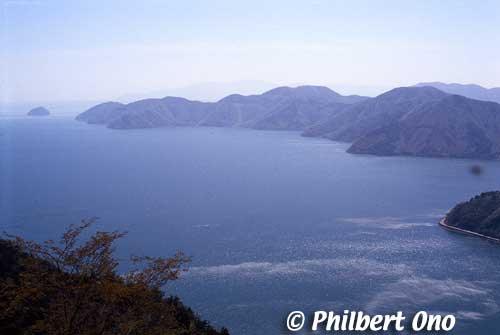 Lake Biwa from Mt. Shizugatake. More Shiga photos here. Lake Biwa from Mt. Shizugatake. More Shiga photos here.
| ||

| ||
| Google Map of Shiga here. | ||
| Location | Honshu island, Kinki region | |
| Neighbors | Fukui Prefecture, Gifu Prefecture, Mie Prefecture, Kyoto Prefecture | |
| Population | 1,407,891 (36,158 foreigners as of Dec. 31, 2022) (31st) (Feb. 1, 2022) | |
| Area | 4,017.36 km² (14.0% water) (38th) | |
| Major Cities | Otsu (capital), Hikone, Nagahama, Higashi-Omi, Omi-Hachiman, Koka, Maibara | |
| Major Sights | Lake Biwa, Hikone Castle, Chikubushima, Mt. Hiei, Enryakuji Temple, Ukimido Floating Temple, Ishiyama and Miidera Temples, Koto Sanzan Temple Trio, Mt. Shizugatake, Lake Yogo, Shigaraki | |
| Major Gateways | JR Maibara Station, Otsu Station, Kyoto Station and Yamashina Station (Kyoto Pref.) | |
| Train Lines | JR Tokaido Main Line, Tokaido Shinkansen, Kosei Line, Hokuriku Main Line, Kusatsu Line, Ohmi Railways | |
| Travel Time | 2.5 hours from Tokyo to Maibara Station via Hikari shinkansen; 2.25 hours from Tokyo to Kyoto via Nozomi shinkansen, then 10 min. to Otsu via Tokaido Line; 10 min. from Kyoto Station to Otsu Station via JR; 25 min. from Sanjo-Keihan (Kyoto) to Keihan Biwako Hama-Otsu Station | |
| Claim to Fame | Lake Biwa, Japan's largest lake | |
| Products | funazushi, Omi-gyu (beef), Shigaraki pottery, Lake Biwa pearls | |
| Old Name(s) | Omi (Ohmi) 近江 | |
| Keywords | Biwako (Lake Biwa), Omi (Ohmi), Omi shonin merchants, Heiwado | |
| Historical Persons | Emperor Tenji, Saicho, Lady Murasaki Shikibu, Oda Nobunaga, Azai Nagamasa, Ii Naosuke, William Merrell Vories | |
| Related Links | Shiga Articles | Shiga Photos | |
| Tourist Links | shiga-ken.com | JNTO | |
| Shiga Prefectural Government | ||
| Address | 〒520-8577大津市京町4-1-1 4-1-1 Kyomachi, Otsu-shi, Shiga-ken 520-8577 JAPAN | |
| Phone | (077) 524-1121 | |
| Official Site | Japanese site | |
| Symbols | Flower: | Rhododendron (shakunage) |
| Tree: | Japanese maple (momiji) | |
| Bird: | Little grebe (kaitsuburi) | |
| Others: | Lake Biwa | |
| Logo: | 
| |
| Sister States | Michigan, USA; Rio Grande do Sul, Brazil; Hunan, China. Sister cities here (CLAIR) | |

| ||
by Philbert Ono, Last updated: Apr. 3, 2023
Shiga Prefecture (滋賀県; Shiga-ken) is one of the 47 prefectures of Japan, located next to Kyoto Prefecture in the Kinki (Kansai) Region on Japan's largest island of Honshu.
Famous for:
- Lake Biwa, Japan's largest lake with numerous endemic species.
- Koka (Koga) ninja in the city of Koka.
- Mt. Hiei and Enryakuji Temple where many founders of Japanese Buddhist sects trained.
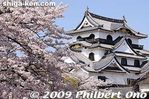
- Hikone Castle (National Treasure), one of the few original castles remaining.
- Third highest number of National Treasure buildings in Japan: Miidera, Ishiyama-dera, Hiyoshi Taisha, etc.
- Azuchi Castle (now in ruins) built by Nobunaga in the 16th century. Japan's Azuchi-Momoyama Period (1573-1603) is partially named after this castle.
- Shigaraki pottery, one of Japan's ancient, renown kilns.
- Funazushi fermented lake fish, the origin of modern sushi.
- Omi beef.
A prefecture is like a U.S. state with its own locally-elected governor and legislature. Each prefecture consists of municipalities that are designated as cities, towns, or villages depending on the population level. Shiga has currently has 13 cities, 6 towns, and no villages. The capital city is Otsu in southern Shiga adjacent to the city of Kyoto in neighboring Kyoto Prefecture. Shiga's population is about 1.42 million (as of Jan. 1, 2019, including 29,274 foreigners) in an area larger than Tokyo.
Like a belly button on a map of Japan
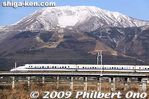
You can easily find Shiga on a map of Japan with Lake Biwa looking like a belly button near the center of Honshu. Shiga's other neighbors are Fukui Prefecture in the north, Gifu Prefecture in the east, and Mie Prefecture in the southeast. Kyoto Prefecture is in the west. Most people traveling to Kyoto or Osaka from the east (Tokyo, etc.) will usually have to pass through Shiga either by train (including the Tokaido Shinkansen bullet train) or expressway.
Lake Biwa, Japan's largest lake
Shiga's most prominent natural feature is Lake Biwa, Japan's largest lake and one of the world's oldest lakes dating back 4 million years. It occupies one-sixth of the prefecture's total area. In area, it is slightly larger than the 23 wards in central Tokyo. The shore length is about 241 km (149 mi). The lake's long history and diverse habitats such as rocky and sandy shores, cold and pelagic waters, and reed beds gave rise to over 70 endemic fish and mollusk species and subspecies found nowhere else.
The lake supplies water to 14.5 million people in Kyoto and Osaka via man-made canals. Shiga is therefore very sensitive to and wary of nuclear power plants operating in neighboring Fukui Prefecture. Popular lake activities include bicycling, bird-watching (especially for migratory birds in winter), rowing, swimming in summer, and sightseeing boat cruises. Although Shiga is a landlocked prefecture, Lake Biwa endows it with good swimming beaches. The western and northern shores of the lake along the Kosei Line are generally more scenic with sandy white beaches.
Mountains form a giant bowl
Shiga is fringed by mountain ranges such as the Ibuki, Hira, and Suzuka almost all around. They make Shiga like a giant bowl with Lake Biwa collecting water from the mountains via 110 inflowing rivers. There is only one outflowing river, Seta River and two outflowing canals (Lake Biwa Canal) in Otsu. The lake's water level is controlled by a sluice on Seta River. In winter, northern Shiga (Yogo, Nagahama, Maibara, Imazu) is colder with higher snowfall than in southern Shiga.
Formerly named "Omi"
During the feudal period, Shiga was a samurai domain named "Omi" (also spelled "Ohmi" 近江). Since it was the doorstep to Kyoto, the Imperial Capital where the emperor resided, being in control of Omi was critical to the samurai government. Omi was also a critical transportation link to and from Kyoto. The two major major roads connecting Kyoto and Tokyo, the Tokaido and Nakansendo, passed through Omi. Also, cargo ships on Lake Biwa linked Kyoto to northern Japan via Fukui Prefecture. After the feudal system was abolished in 1868, Omi was finally renamed "Shiga Prefecture" in 1872.
Rural prefecture, rural economy
With a population of about 1.4 million, Shiga is a rural prefecture with no large cities. Most of the population is concentrated in southern and eastern Shiga along the JR Tokaido/Biwako Line. The northern and western areas are rural with less frequent train service (JR Kosei Line). Shiga's population, especially in southern Shiga, has been increasing since it is within commuting distance to Kyoto and Osaka. Housing is more affordable in Shiga. People in Shiga speak a dialect similar to the Kyoto and Kansai dialects. Shiga people are generally quite conservative, especially the older generation.
Agriculture is Shiga's major industry, mainly rice named "Omi-mai" (近江米). Fine tea called "Omi-cha" is also grown, mainly in Tsuchiyama, Koka. Omi wagyu beef is another famous product of Shiga. For years, the Lake Biwa fisheries industry has been seriously declining due to declining fish stock caused by invasive species and cormorants.
With over 2,600 factories large and small, Shiga also has one of the highest number of manufacturing factories in Japan, attracting many Brazilian workers since the 1990s especially in eastern Shiga. Vast majority of the factories employ less than 300 employees. The majority employ less than 30 workers.
Other than Otsu and Hikone, most places in Shiga are not really geared for foreign tourists. There is a lack of tourist information in foreign languages and multilingual tourist information staff in most places.
Many National Treasures, architecture
Being next to Kyoto, Shiga has many Buddhist temples and shrines. A number of them are National Treasures and one is a World Heritage Site (Enryakuji Temple). After Nara and Kyoto Prefectures, Shiga has Japan's third highest number of buildings (22) that are National Treasures including Hikone Castle, one of only five National Treasure castle towers in Japan.
The old Tokaido and Nakasendo Roads in Shiga leading to Kyoto have vestiges of the former shukuba lodging towns such as in (Kusatsu) and Samegai. Also during the feudal period, Omi merchants from Shiga sold textiles, medicines, lacquerware, and other goods all over Japan. They became wealthy and built luxury Japanese-style homes in Omi-Hachiman, Gokasho, and Hino. Some of the grand homes are open to the public.
Famous things and people
Well-known local symbols of Shiga include Hiko-nyan (official white cat mascot of Hikone), Heiwado (supermarket chain), and funazushi fermented carp (cheesy fish). Omi wagyu beef, red konnyaku devil's tongue, Biwa salmon, and ayu sweetfish (from Lake Biwa) are other famous delicacies of Shiga. Lake Biwa freshwater pearls were internationally famous during the 1960s to early 1980s until the Biwa pearl mussels were decimated by pollution. Today, only a few pearl farmers in Shiga are cultivating Biwa pearls. Vintage Lake Biwa pearls are still being sold.
Nationally-known companies founded in Shiga include the Seibu Group (railways, Seibu Department Stores, and Prince Hotel chain), Itochu, Marubeni, Yanmar, Nippon Travel Agency, and Shirokiya (namsake still exists in Honolulu, Hawaii). Takata Corporation, former maker of the defective Takata airbags, was founded in Shiga. TORAY and Daihatsu are also major employers in Shiga.
Currently, the most famous contemporary people from Shiga include Yui Ohashi (1995- ), double gold medalist for Women's Individual medley swimming at the Tokyo 2020 Olympics, Yoshihide Kiryu (1995- ), an Olympic track star from Hikone who used to hold Japan's 100-meter record with a time of 9.98 seconds. Takashi Inui (1988- ), a Japanese footballer/soccer player from Yasu who was on Japan's national team at the 2018 World Cup. Yukiko Inui (1990- ), an Olympic synchronized swimmer from Omi-Hachiman who won Olympic bronze in Rio. (No relation to Takashi.) Take Yutaka (1969- ), Japan's longtime top racehorse jockey from Ritto. Takanori Nishikawa (1970- ), very popular musician, singer, and songwriter from Yasu. He performs under the stage name T.M.Revolution (TMR). Hiro Yamagata (1948- ), print artist from Maibara.
Obscure prefecture
Shiga is one of Japan's lesser known and obscure prefectures, especially among foreign visitors and foreigners who live in Japan away from the Kansai Region. As a desirable tourist destination, it is usually ranked toward the bottom among the 47 prefectures even among Japanese travelers. Although Lake Biwa is Shiga's top symbol and claim to fame, it is still not a strong national or international attraction like Lake Ashi (Mt. Fuji) in Kanagawa, Lake Towada (autumn foliage) in Aomori, or Lake Mashu in Hokkaido which are all in a national park. (Lake Biwa is not a national park. It is only a quasi-national park which is a lower designation.)
Shiga has never been good at tourism PR either. Shiga has never had a creative tourist slogan nor PR campaign that captured the public's attention and imagination. Tourism information for foreigners (if any) is usually in poor-quality English on both paper and online.
However, obscurity does not mean a lack of top-notch sights and discoveries. Anyone who dares to visit this obscure place will find many unexpected delights. It really is an off-the-beaten path, which makes it more adventurous. You just have to make the time to come and visit.
Forever in the shadow of Kyoto
Shiga has always been overshadowed by its much more famous neighbor Kyoto. Typical tourists have too many things to see in Kyoto and not even think about visiting Shiga. This has been a most frustrating predicament for Shiga tourism for ages. Being much more rural with a slow life, Shiga is a great place to get away from the tourist crowds of Kyoto.
Getting to Shiga
Shiga is easy to get to, especially from Kyoto Station, a shinkansen station and hub for local train lines going to Shiga. A short train ride can get you to Otsu. Up north, Maibara Station is Shiga's shinkansen bullet train station (about 2.5 hours from Tokyo). Maibara Station also has direct train lines from Nagoya in Aichi Prefecture and the Hokuriku region (Fukui, Ishikawa, and Toyama Prefectures). For details, see Getting There & Around below.
Major Sights
| 
| 
|
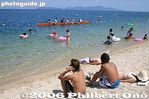
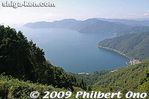
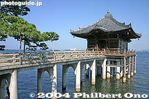
| Lake Biwa | Mt. Shizugatake | Katata Ukimido |
| 
| 
|
| Hikone Castle | Hiko-nyan | Mt. Ibuki |
| 
| 
|
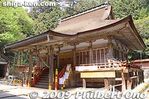
| Enryakuji temple | Ishiyama-dera | Hiyoshi Taisha Shrine |
| 
| 
|
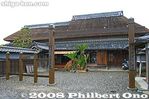
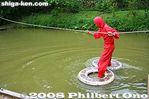
| Koka ninja house | Ninja Village | Shigaraki |
*Main article: Shiga Prefecture Sights
Sightseeing in Shiga is basically about Lake Biwa, traditional architecture (National Treasure Buddhist temples and Shinto shrines), traditional townscapes (Omi-Hachiman, Gokasho, and Hino) and neighborhoods (Harie), National Historic Sites (mostly related to famous samurai), water sports and cycling, pottery, festivals (matsuri), lakeside cherry blossoms, and autumn foliage at major temples (being next to Kyoto, Shiga has many Buddhist temples). There are no national parks in Shiga. Lake Biwa is a quasi-national park.
Shiga's most tourist-oriented cities are Otsu, Hikone, Nagahama, Kusatsu, and Omi-Hachiman. Most of the major sights in these cities are in a compact area and easily accessible. Larger cities (in area) like Takashima, Higashi-Omi, and Koka have major sights scattered over a large area, requiring more time and effort to get to them.
From Kyoto, the most popular day trips to Shiga include: 1. A visit to the Shigaraki pottery center and Miho Museum in Koka, 2. Guided tour of the Harie neighborhood of natural springs in Takashima, 3. Tour of Enryakuji Temple in Otsu, and 4. Koka Ninja House, and 5. Hikone Castle.
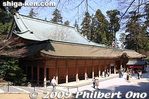
Otsu has nationally famous Buddhist temples Enryakuji (part of a World Heritage Site called Historic Monuments of Ancient Kyoto) atop Mt. Hiei, Ishiyama-dera, and Miidera all have major structures designated as National Treasures.
Hikone has Hikone Castle, one of only five main castle towers in Japan designated as a National Treasure. With regard to architecture (mainly temples and shrines), Shiga has the third highest number (22) of buildings which are National Treasures, following Nara (64) and Kyoto (48).
Central Nagahama is a laid-back provincial city with a variety of delights such as the lakeside Nagahama Castle, attractive shopping arcades, Daitsuji Temple, Hikiyama Float Museum, and train museum. All within walking distance from Nagahama Station. If you have time, go to Nagahama Port and take a boat to Chikubushima island.
Omi-Hachiman is another architecturally interesting place with traditional townscapes and buildings designed by American missionary William Merrell Vories (1880–1964). The Hachiman-bori Canal area is often used a backdrop in Japanese samurai movies and TV series. Club Harie and Taneya sell famous local confections.
Kusatsu was a lodging town along the old Nakasendo and Tokaido Roads. The Kusatsu Honjin is an outstanding example of the VIP accommodations built for the traveling shogun and daimyo lord. Also in Kusatsu is the best place to learn about Lake Biwa (Biwako) at Lake Biwa Museum.
Besides Shiragaki pottery, Koka is famous for Koka-ryu (Koga) ninja. You can visit the world's only authentic ninja house that still remains in its original location in Koka.
Since prominent daimyo feudal lords such as Oda Nobunaga, Toyotomi Hideyoshi (Nagahama Castle), Yamauchi Kazutoyo (Nagahama Castle), and Azai Nagamasa (Odani Castle) once lived in Shiga (known as Omi Province), Shiga has many National Historic Sites related to the feudal era. The Azuchi-Momoyama Period (1573-1603) is partially named after Azuchi Castle that Nobunaga built in the 16th century in present-day Omi-Hachiman. If you like samurai history, visit Shiga.
During the peaceful Tokugawa Period, lodging towns along the Tokaido Road and Nakasendo Road flourished as traders and VIPs traveled between Tokyo (Edo) and Kyoto. In Shiga, the best preserved lodging towns (called shukuba-machi), romanticized in woodblock prints, include Samegai, Kusatsu, and Tsuchiyama. Other traditional townscapes and homes in Shiga include Omi merchant homes in Omi-Hachiman, Gokasho, and Hino.
Shiga is lesser known internationally, but it does have many things that would interest anyone. Shiga is often paired with Kyoto as if it were a part of Kyoto. But Shiga is totally different from Kyoto and has its own unique identity and culture.
For a complete list of tourist attractions, see Shiga Prefecture Sights.
Also see National Treasures of Shiga_Prefecture.
Shiga Festivals
*Main article: Festivals of Shiga Prefecture
Shiga has numerous matsuri (religious festivals or festive events) to celebrate nature, worship a god, pray for a good harvest, pray for good health and prosperity, etc. Most are held by Shinto shrines and Buddhist temples, and others are held by local organizations. There is a wide variety: float festivals, mikoshi (portable shrine) festivals, fire festivals, costumed processions, rice-planting ceremonies, and more. There are festivals every month of the year, but April, May, October, and November have the most. The great thing is that even Shiga's biggest festivals are not that crowded (except for fireworks) compared to festivals in Kyoto.
Festivals of Shiga Prefecture lists major festivals in an event calendar.
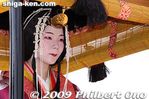
The thumbnails below only show a small sample of Shiga's festivals. Click on a thumbnail to see more photos of the respective matsuri.
I also have videos of Shiga festivals on YouTube.


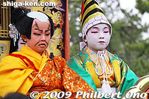
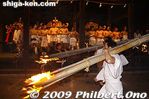
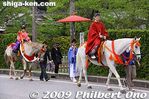
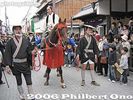

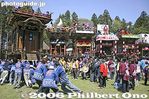


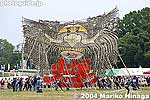
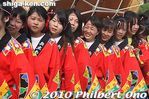
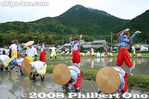
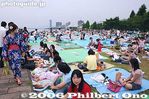
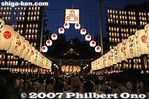
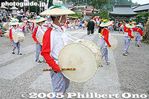

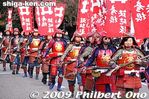
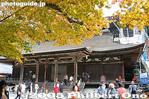
*Complete list of major festivals at Festivals of Shiga Prefecture organized in an event calendar.
*More sights at Shiga Prefecture Sights.
Travel Tips
If you're like most tourists visiting Japan, you will likely visit and stay in Kyoto. If so, Shiga is an easy half-day or day trip from Kyoto. If you like visiting temples, Otsu is only a short train ride from Kyoto Station. From Kyoto, there are direct trains which go as far as Nagahama in northern Shiga (or Tsuruga in Fukui Prefecture) on the Tokaido/Biwako Line.
However, if you prefer to lodge in Shiga, the following cities are ideal tourist bases with a good number of hotels. Shiga is a great place to escape the hustle and bustle and tourist crowds of Kyoto.
For current weather warnings/advisories in Shiga, see this page (Japan Meteorological Agency).

- Otsu - Kyoto's neighbor and Shiga's capital city stretches a very long way along the southern shore of Lake Biwa. It has a number of important and historical temples and shrines such as Enryakuji atop Mt. Hiei, Miidera, Ishiyama-dera, Hiyoshi Taisha, and Omi Jingu. Otsu Port is also home to the Michigan paddlewheel boat offering lake cruises.
- Hikone - This is a well-known castle town with Hikone Castle preserved well-enough to be designated as a National Treasure. Next to it is Genkyu-en Garden. Hikone Port has boats going to Chikubushima and Takeshima islands.
- Nagahama - Shiga's largest city up north has a reconstructed castle, Japan's oldest train station building (now a museum), temples, the Kunitomo Gun Museum, and Kurokabe Square with black-walled shops. Nagahama Port has boats going to Chikubushima island. A short train ride further up north can also take you to nearby sights like Mt. Shizugatake and Lake Yogo.
- Omi-Hachiman - A former merchant and castle town, this is another historical city which history buffs and architecture fans would love. Mt. Hachimanyama used to be a castle and it still gives great views of the city and lake. Nearby is also Azuchi Castle ruins and Omi merchant homes at Gokasho. The Ohmi Railway also leads to Yokaichi in Higashi-Omi.
- Kusatsu - A former post town on the Tokaido and Nakasendo Roads is the gateway to southeastern Shiga (especially Koka) with the JR Kusatsu Line starting in Kusatsu.
- Takashima - Takashima occupies all of western Shiga. It is much more quiet and rural in Takashima and yet very picturesque with lakeside beaches and parks. Omi-Imazu and Makino have hotels with good views.
*See also Budget Accommodations below.
Ideal Itineraries
- Visit Enryakuji temple on Mt. Hiei. Enryakuji is accessible from Kyoto via the Eizan Cable Car or by bus. From Otsu via the Sakamoto Cable Car. It's large temple complex, but the main area is Todo.
- Visit important temples in central Otsu. Should start with Ishiyama-dera, then visit Miidera, Ukimido, and Sakamoto.
- Go on a lake cruise from Otsu Port. Boats leave a few times a day. The Michigan paddlewheel boat is a longtime fixture on the lake. Sixty-minute and 90-min. cruises are offered.
- Visit Omi-Maiko beach. Take the JR Kosei Line from Kyoto Station and get off at Omi-Maiko Station to see white sand beaches.
- Visit Hikone Castle. Easily accessible by train from almost everywhere. From Kyoto, take the JR Tokaido/Biwako Line and get off at Hikone Station. The castle is a short walk from the station.
- Visit Koka Ninja House and Ninja Village in Koka. Take the JR Kusatsu Line to Konan Station or Koka Station and take a taxi or call the Ninja Village (0748-88-5000) for a free ride. Unfortunately, there is no public transportation between the Ninja Village and Koka Ninja House. Call a taxi at either place to visit the other.
- Go up Mt. Shizugatake on the chair lift and hike down to Lake Yogo. Buses and taxis to Mt. Shizugatake are available at JR Kinomoto Station. Atop the mountain are grand views of two lakes: Lake Biwa on one side and Lake Yogo on the other side. Hike down to Lake Yogo and rest or eat at the lakeside lodge called Yogoko-so.
- Visit Chikubushima island. Boats leave often for Chikubushima from Hikone, Nagahama, and Omi-Imazu Ports. Best way to see the lake.
- Bicycle or drive around Lake Biwa. The road around the lake is quite flat. Allow at least three days to cycle completely around the lake. Or two days if you plan to take a short cut and cross Biwako Ohashi Bridge at the neck of the lake.
- Visit Kaizu-Osaki cherry blossoms in spring. JR Makino Station on the JR Kosei Line has rental bicycles convenient to ride to the Kaizu-Osaki lake shore. But beware of heavy traffic during cherry blossom season.
- Visit central Nagahama. Many attractions within a small area around JR Nagahama Station. Toward the lake is the reconstructed Nagahama Castle (local history museum) affording great views of the lake and city. The castle is in Hokoen Park, famous for cherry blossoms in April. On the other side of Nagahama Station toward the mountains is Kurokabe Square (glass shop) and shopping arcade. Visit the Hikiyama Museum and Daitsuji temple.
- Visit the Koto Sanzan Temple Trio in fall. During the fall colors, buses run between the three temples and Eigenji. Start at either Eigenji (bus from Yokaichi Station) or Saimyoji (bus from Hikone Station). You can buy an Omi Railway train/bus pass for only ¥1,800 to visit all three Koto Sanzan temples plus Eigenji Temple.
- Visit Konan Sanzan Temple Trio. Another similar trio of temples, but lesser known. The three temples all have National Treasure Buildings, but there is no convenient shuttle bus linking all three.
- If you have a car or can rent one, driving around Lake Biwa is also highly recommended. It will take a full day, including sightseeing time. Crossing the Biwako Ohashi Bridge at the neck of the lake can also save time. (Buses also cross the lake between Moriyama and Katata Stations.) Besides driving along the lake shore, driving along the mountain roads on Mt. Hiei and Oku Biwako Parkway also affords grand views of the lake.
Other Tips
- Major train stations such as Otsu Station, Omi-Hachiman Station, Kusatsu Station, Hikone Station, Nagahama Station, and Omi-Imazu Station have a tourist information office or booth where you can pick up maps and pamphlets for that city or town. Sometimes English brochures are also provided.
- When traveling on the JR Kosei Line in western Shiga, note the train schedule for your return trip. Train runs can be very infrequent.
- Some train stations in Shiga have rental bicycles. See "Getting Around" below. A few of the luxury hotels in Shiga might also have rental bicycles. Cycling along the lake shore is great during the warmer months. Much of the lake is ringed by a cycling road. You can rent a bicycle at one train station and return it at another. Very convenient. It is also possible to bicycle around the entire lake (It took me 3 days to bicycle around the lake.). The terrain is very flat except for the killer slopes along the northern shore's Oku Biwako Parkway road.
- On weekends, Ohmi Railways offer the "free kippu" train pass for only 550 yen. You can use it to ride the Ohmi Railways all day. A good deal if you plan to ride the Ohmi Railways train at least twice. Also, during non-rush hours (9 am - 4 pm), you can bring your bicycle aboard the train. This railway line is good for exploring eastern Shiga in Higashi-Omi and Koka.
- Shiga's most famous delicacies are funa-zushi and Omi-gyu beef. Funa-zushi is fermented crucian carp (nigorobuna) which may smell rotten to the uninitiated. But it goes very well with sake or beer. Omi-gyu is top-grade beef.
Maps of Shiga
Google Maps of Shiga cities and towns with English placemarks (so far):
Aisho Map | Higashi-Omi Map | Hikone Map | Hino Map | Koka Map | Konan Map | Kora Map | Kusatsu Map | Maibara Map | Moriyama Map | Nagahama Map | Omi-Hachiman Map | Otsu Map | Ritto Map | Ryuo Map | Taga Map | Takashima Map | Toyosato Map | Yasu Map
Getting There & Around
Main article: Shiga Prefecture Transportation.
Getting to Shiga is easy from the Tokyo, Nagoya, Kyoto/Osaka, and Kanazawa directions. The Tokaido Shinkansen bullet train stops at Maibara Station (Kodama and some Hikari trains) in northern Shiga and Kyoto Station in Kyoto next to Otsu in southern Shiga. The JR Tokaido/Biwako Line runs through eastern Shiga between Nagoya (Aichi Pref.) and Osaka/Kyoto. From the Hokuriku region (Fukui, Ishikawa, and Toyama), the JR (Japan Railways) Hokuriku Main Line arrives at Nagahama and Maibara Stations. Western Shiga is covered by the JR Kosei Line from Kyoto.
By train
- From JR Tokyo Station to Maibara Station: About 2.5 hours via shinkansen bullet train. All Kodama trains and a few Hikari trains (about once an hour) stop at Maibara. Or get off at Kyoto Station and take a local train to Shiga. Takes 2.25 hours from Tokyo to Kyoto via Nozomi shinkansen, then 10 min. to Otsu via Tokaido Line.
- From JR Kyoto Station to Otsu Station: About 10 min. via JR Tokaido/Biwako Line.
- From Sanjo-Keihan (Kyoto) to Keihan Biwako Hama-Otsu Station: 25 min. via Keihan Keishin Line.
- From JR Gifu Station to Maibara Station: About 40 min. via Tokaido Main Line.
- From JR Nagoya Station to Maibara Station: About 25 min. via shinkansen or 1 hr 15 min. via Tokaido Main Line (train transfer at Ogaki Station may be required).
By air
- Nearest international airport: Kansai International Airport in Osaka (the Haruka express train goes to Shiga in the evenings) and Central Japan International Airport in Aichi Prefecture.
- Nearest local airport: Osaka International Airport
Getting Around
Travel within Shiga is easy via JR Lines, private railways, local city buses, and taxi cabs. There is at least one train station in almost all cities and towns in Shiga. Trains are relatively frequent along the heavily-traveled Tokaido Main Line (also called Biwako Line between Nagahama and Kyoto) is frequent, and less frequent along the JR Kosei Line along the western shore. It is possible to travel around Lake Biwa entirely by train on the JR Tokaido Main Line and Hokuriku Main Line on the eastern side and the scenic Kosei Line along the western shore. However, since it is not a loop line, at least two train transfers (at Yamashina Station and Omi-Shiotsu Station) will be necessary along the way.
In eastern Shiga, the private Ohmi Railways serve a few cities such as Higashi-Omi and Koka. However, the trains (usually only two or three cars) are quite slow and not that frequent. For foreign tourists, there is the two-day pass good for Ohmi Railways and Ohmi bus (as of Oct. 2018). On weekends, the Free Kippu ticket (despite its name, it's not free) is available at a bargain price (¥880 for adults as of Oct. 2018) and you can use it to ride the Ohmi Railways all day. A good deal if you plan to ride the Ohmi Railways train at least twice. Also, during non-rush hours (9 am - 4 pm), you can bring your bicycle aboard the train.
Wheelchair users and baby stroller users should be aware that many train stations in Shiga do not have elevators, escalators, or ramps, especially in rural areas. The larger train stations (Otsu, Maibara, Nagahama, etc.) and newer stations are wheelchair accesssible. However, Shiga still has many old and rural train stations without ramps or elevators especially on the Ohmi Railway lines. Many of the smaller stations are not even staffed. (No one to help you get on/off the train.) Click on the train station link to check if it's wheelchair accesssible with an elevator, escalator, or ramp.
Buses operated by Ohmi Railways and Keihan operate from the major train stations. See the routes and schedules here: Ohmi Railways bus routes] (Japanese only).
Rental bicycles are also great for lakeshore touring. Bicycling around the entire lake (about 200 km and nicknamed "Biwa-ichi) is quite popular. You can also bicycle only a few km between train stations. The following train stations in Shiga have rental bicycles: Kusatsu Station, Omi-Hachiman Station, Azuchi Station (North exit), Maibara Station (high-end bicycles), Sakata Station, Nagahama Station, Torahime Station, Takatsuki Station, Kawake Station, Kinomoto Station, Yogo Station, Omi-Shiotsu Station, Nagahara Station, Makino Station, Omi-Imazu Station, Omi-Takashima Station, Shin-Asahi Station (West exit), Adogawa Station, Sakamoto Station, Terasho Station, Konan Station, Ishibe Station, Kosei Station, Koka Station, Aburahi Station, and Shigaraki Station. Usually, you can rent a bicycle at one train station and return it at another if it's on the same train line. The bicycles are rented out by the local tourist association or a private vendor. It's usually 500 yen for the day's rental, and the bicycle must be returned by 5 pm or so. A few of the luxury hotels in Shiga may also have rental bicycles such as the Lake Biwa Marriott Hotel with a GIANT bicycle rental shop in Moriyama. Main article: Cycling Around Lake Biwa and Shiga Prefecture
You can also travel by boat on Lake Biwa. Boats depart from Otsu, Hikone, Nagahama, and Omi-Imazu Ports.
Details at Shiga Prefecture Transportation.
Municipalities

*Main article: Shiga Prefecture Municipalities
As of March 21, 2010, Shiga has 13 cities (-shi; 市), 6 towns (-cho; 町), and no villages (-mura; 村). This is less than half the number of municipalities before the Heisei Municipal Mergers when there were 7 cities, 42 towns, and 1 village in Shiga as of Sep. 30, 2001.
The major cities are Otsu (capital), Hikone, Nagahama, Higashi-Omi, and Maibara.
Shiga also has the following regions: Kohoku (north of lake 湖北) which includes Maibara, Hikone, and Nagahama cities; Kosei (west of lake 湖西) which includes Takashima city; Koto (east of lake 湖東) which includes Higashi Omi and Omi-Hachiman; and Konan (south of lake 湖南) which includes Otsu, Kusatsu, Moriyama, Ritto, Yasu, Konan, and Koka cities.
*Annotated list of municipalities at Shiga Prefecture Municipalities.
| Municipalities of Shiga Prefecture 滋賀県 | ||
| Cities & Towns: Aisho-cho | Higashi-Omi | Hikone | Hino-cho | Koka | Konan | Kora-cho | Kusatsu | Maibara | Moriyama | Nagahama | Omi-Hachiman | Otsu | Ritto | Ryuo-cho | Taga-cho | Takashima | Toyosato-cho | Yasu | ||
| 愛荘町 | 東近江市 | 彦根市 | 日野町 | 甲賀市 | 湖南市 | 甲良町 | 草津市 | 米原市 | 守山市 | 長浜市 | 近江八幡市 | 大津市 | 栗東市 | 竜王町 | 多賀町 | 高島市 | 豊郷町 | 野洲市 | ||
Shiga History
The two biggest factors influencing Shiga's history has been Japan's largest lake called Lake Biwa and Shiga's location next to Kyoto, the old Imperial Capital of Japan where the Emperor of Japan resided.
See Main article: History of Shiga Prefecture.
Photos
As of Oct. 11, 2018, over 17,200 photos of every city and town in Shiga here.
Videos
My video clips of Shiga Prefecture are on YouTube. See all my Shiga videos indexed in categories here.
Miscellaneous
Recent News
The latest news headlines via Twitter:
More Shiga news at Shiga News Headlines by Philbert Ono.
Trivia
- The life expectancy of Shiga residents ranks among the longest in Japan. In 2021, Shiga males enjoyed the longest life expectancy in Japan and Shiga women ranked No. 4 in Japan.
- Shiga has one of Japan's highest number of factories. Since the 1990s, this has attracted a large Brazilian population who work in the factories.
- As of Dec. 31, 2006, Shiga had Japan's lowest ratio of obstetricians and gynecologists per 100,000 women aged 15 to 49 at 26.8 doctors. Tottori Prefecture had the highest ratio at 60.5.
- According to a 10-year study (starting in 1982) by Shiga Prefecture, the prefecture, formerly known as Omi-no-kuni, has seen a total of 1,328 castles built within its boundaries over the centuries. This makes Shiga the 4th highest in the nation with former castles built within its domain. Koka is the city in Shiga with the highest number of former castles at 223.
- In Aug. 1876, four counties in western Fukui Prefecture north of Shiga merged with Shiga. For about 5 years up to 1881 while these counties (including Tsuruga and Mikata) were part of Shiga, Shiga enjoyed having a coast facing the Sea of Japan.
- During a meeting of the governors of Kyoto and Shiga in late 2005, the idea of merging Kyoto and Shiga Prefectures was mentioned.
- Since Ohmi Railways is owned by the same company which owns Seibu Railways in Tokyo, many of the train cars look like the old Seibu Railway cars brought to Shiga from Tokyo. Local buses also might sport the same color theme or lion logo as the Seibu Railways and bus lines.
- Takashimaya Dept. Store got its name from Takashima, Shiga. However, there is no branch store in Shiga.
Famous People
- Ohashi Yui (1995- ) 大橋 悠依 - Hikone native who won two gold medals at the Tokyo 2020 Olympics for the Women's 400m individual medley and Women's 200m individual medley.
- Kiryu Yoshihide (1995- ) 桐生 祥秀 - Track star from Hikone who holds Japan's 100-meter record with a time of 9.98 seconds.
- Inui Takashi (1988- ) 乾 貴士 - Japanese footballer/soccer player from Yasu who was on Japan's national team at the 2018 World Cup.
- Inui Yukiko (1990- ) 乾 友紀子 - Japanese competitor in synchronized swimming representing Japan at the Olympics. From Omi-Hachiman. (No relation to Takashi.)
- Yamaoka Magokichi (1888-1962) 山岡孫吉 - Native of Takatsuki-cho in northern Shiga and founder of Yanmar Diesel Co.
- Tsutsumi Yasujiro (1889-1964) 堤康次郎 - Hailing from Hatasho-cho, founder of the Hakone Tochi Co., the forerunner of Kokudo Co. which operate Seibu Railways and other interests. Father of Tsutsumi Yoshiaki, the disgraced president of Kokudo born to a mistress. The company also operates the Ohmi Railways and bus lines in Shiga.
- Itoh Chube'e (1842-1903) 伊藤忠兵衛 - Native of Toyosato and Omi shonin merchant who founded one of Japan's largest trading companies, C. Itoh. He even had a shop in San Francisco, California. His second son Seiichi, also born in Toyosato, set up the C. Itoh company (now Itochu Corporation) in 1918 and started importing textiles from England where he had studied abroad. His house in Toyosato is open to the public.
- Ogura Yuki (1895-2000) 小倉遊亀 - Renown Japanese painter from Otsu.
- Uno Sosuke (1922-1998) 宇野 宗佑 - Native of Moriyama who was Japan's 75th prime minister in 1989. Unfortunatelty, he was also one of the shortest-serving prime ministers in history, being forced to resign after only three months (June-August 1989) in office. His extramarital affair with a Kagurazaka geisha turned into a widely-reported sex scandal, leaving him no choice but to resign in total disgrace.
- Take Yutaka (1969- ) 武豊 - Japan's top racehorse jockey from Ritto.
- Nishikawa Takanori (1970- ) 西川 貴教 - Musician, singer, and songwriter from Yasu. He performs under the stage name T.M.Revolution (TMR), which stands for "Takanori Makes Revolution."
- Hiro Yamagata (1948- ) ヒロ・ヤマガタ - Print artist, native of Maibara.
- Tahara Soichiro (1934- ) 田原 総一朗 - Japanese political journalist from Hikone.
See also History_of_Shiga_Prefecture#Historical_Persons.
Foreigners in Shiga
As of Dec. 31, 2022, Shiga Prefecture had a record 36,158 registered foreign residents. The number rebounded after Japan reopened to foreigners after decline of COVID-19. It reflects the demand for factory workers in Shiga. By nationality, Brazilians are the biggest group in Shiga numbering 9,281. Followed by 8,088 Vietnamese and 4,533 Chinese. The number of Vietnamese and Indonesians have increased significantly by 25% and 56% respectively.
Otsu has the largest number of foreign residents numbering 4,910. Followed by Higashi-Omi's 4,424 and Koka's 4,142 foreigners.
Back in Dec. 31, 2009, Shiga Prefecture had 28,422 registered foreign residents from 83 countries. This was 3,810 people less than the year before, or an 11.8% decrease attributed to over 3,000 Brazilians who left Shiga. By nationality, Brazilians were the biggest group in Shiga numbering 11,339 (compared to 14,379 on Dec. 31, 2008). Followed by 5,735 Koreans (North and South), 5,144 Chinese, 1,828 Filipinos, and 1,808 Peruvians. Other nationalities number 2,568.
The number of Americans and other native English speakers are probably in the hundreds. Otsu had the largest number of foreign residents numbering 4,218. Followed by Nagahama's 3,645 (not counting the towns it merged with in Jan. 2010) and Higashi-Omi's 3,489. Brazilians number most in Nagahama (2,447) and in Higashi-Omi (2,137) where there are many factories.
Tourist Information
Major train stations such as Otsu, Hikone, Nagahama, Kusatsu, and Omi-Hachiman have a tourist information desk. They may or may not speak English. Some pamphlets are in foreign languages. Quality of English may be poor.
Sister Cities and International Exchange Associations
Shiga's sister cities are listed here in English (CLAIR).
Shiga's international exchange associations in various cities are list here in English. They are geared to promote better understanding and friendship between Japanese residents and non-Japanese through sister city exchanges, language classes, social gatherings, etc.
On the prefectural level, Shiga has the Shiga Intercultural Association for Globalization (SIA) based in Otsu. They maintain a relationship with Shiga's sister states: Michigan, U.S.A.; Rio Grande do Sul, Brazil; and Hunan, China.
Shiga Kenjinkai
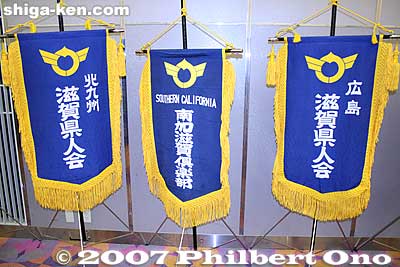 |
| Shiga Kenjinkai banners |
Main article: Shiga Kenjinkai.
A Shiga Kenjinkai 滋賀県人会 is a group or association of people outside Shiga who have ties to Shiga Prefecture. Kenjinkai literally means "native people of the prefecture." Most Shiga Kenjinkai members are originally from Shiga, but members can also be descendants of people originally from Shiga. Anybody interested in Shiga can also become a member. There is a Shiga Kenjinkai in each of the 47 prefectures as well as in 11 countries overseas: USA (Seattle, Southern California, and Hawaii), Canada (Vancouver, Alberta, and Toronto), Mexico, Brazil, Argentina, Peru, Hong Kong, Indonesia, France, UK, and Germany.
All the Shiga Kenjinkai chapters in Japan and overseas belong to the National Federation of Shiga Kenjinkai (全国滋賀県人会連合会) called Zenkoku Shiga Kenjinkai Rengokai or Zenjiren for short. The national federation has its office in the Kyoto Shiga Kenjinkai office.
The Shiga Kenjinkai are very friendly, and they are always looking for new members.
See Main article: Shiga Kenjinkai.
Budget Accommodations
- Riverhill Oishi - Low-cost accommodations geared for bicyclists in Otsu.
- Omi-Hachiman Youth Hostel - In Omi-Hachiman, near Chomeiji. 10-min. bus ride from the station. TEL: 0748-32-2938, FAX: 0748-32-7593 Official site
- Omi Kibogaoka Youth Hostel - In Yasu. Within the large Kibogaoka Park 10 min. by bus from JR Yasu Station. TEL: 077-587-2201, FAX: 077-587-2008
- Wanihama Seinen Kaikan - On the southwestern shore of Lake Biwa, near JR Wani Station in Otsu on the Kosei Line. TEL: 077-594-4203, FAX: 077-594-3197
- Saikyoji Temple - Famous temple (especially for fall colors) which also has lodging facilities. Perfect base to see Sakamoto and Enryakuji Temple on Mt. Hiei. Near Keihan Sakamoto Station and Hie-zan Sakamoto Station in Otsu. TEL: 077-578-0013, FAX: 077-578-3418 Official site
- Guesthouse AN - Small Japanese-style cottage in a quiet residential neighborhood in Otsu. Geared for backpackers. Short walk from Omi-Nakasho Station on the Keihan Line in Otsu. Omi-Nakasho Station is about a 4-min. ride from Ishiyama Station.
Related Articles
- Shiga Prefecture Sights
- History of Shiga Prefecture
- National_Treasures_of_Shiga_Prefecture
- Shiga Prefecture Municipalities
- Shiga Prefecture Transportation
- Festivals_of_Shiga_Prefecture
- Category:Transportation in Shiga - Index to transportation-related articles.
- Lake Biwa Rowing Song - English version of Shiga Prefecture's most famous song sung in English. Audio and video downloads available!
- Biwako Shuko no Uta(日本語)- Shiga Prefecture's most famous song explained in Japanese.
External Links
- shiga-ken.com - Comprehensive guide to Shiga Prefecture in English.
| Municipalities of Shiga Prefecture 滋賀県 | ||
| Cities & Towns: Aisho-cho | Higashi-Omi | Hikone | Hino-cho | Koka | Konan | Kora-cho | Kusatsu | Maibara | Moriyama | Nagahama | Omi-Hachiman | Otsu | Ritto | Ryuo-cho | Taga-cho | Takashima | Toyosato-cho | Yasu | ||
| 愛荘町 | 東近江市 | 彦根市 | 日野町 | 甲賀市 | 湖南市 | 甲良町 | 草津市 | 米原市 | 守山市 | 長浜市 | 近江八幡市 | 大津市 | 栗東市 | 竜王町 | 多賀町 | 高島市 | 豊郷町 | 野洲市 | ||
| Prefectures of Japan | ||
| Aichi | Akita | Aomori | Chiba | Ehime | Fukui | Fukuoka | Fukushima | Gifu | Gunma | Hiroshima | Hokkaido | Hyogo | Ibaraki | Ishikawa | Iwate | Kagawa | Kagoshima | Kanagawa | Kochi | Kumamoto | Kyoto | Mie | Miyagi | Miyazaki | Nagano | Nagasaki | Nara | Niigata | Oita | Okayama | Okinawa | Osaka | Saga | Saitama | Shiga | Shimane | Shizuoka | Tochigi | Tokushima | Tokyo | Tottori | Toyama | Wakayama | Yamagata | Yamaguchi | Yamanashi | ||